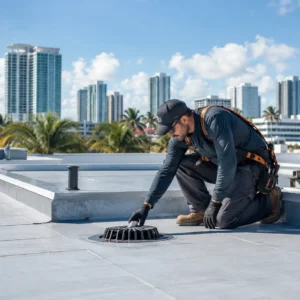
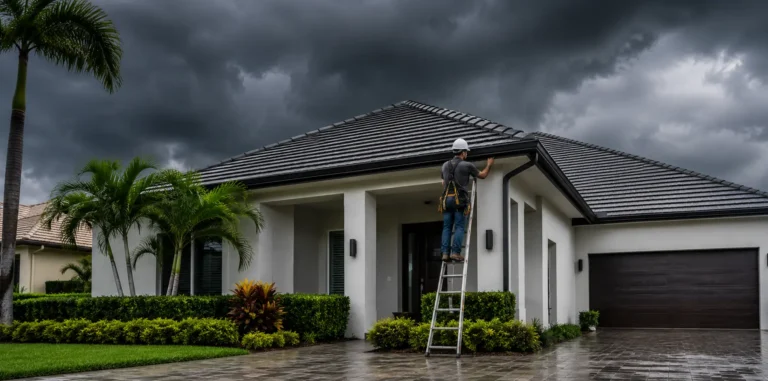
Storm season in South Florida can be tough on residential roofing systems. Heavy rain, strong wind, flying debris, high humidity, and repeated weather changes can expose small roof problems very quickly.
For homeowners, the best time to prepare is before the next major storm arrives. A roof may look fine from the ground, yet still have loose materials, clogged gutters, cracked sealants, weak flashing, or early signs of water intrusion.
A simple roof checklist can help you identify warning signs early and decide when it is time to call a professional for residential roofing services in South Florida.
Why Roof Preparation Matters Before Storm Season
In Florida, your roof does more than protect your home from rain. It helps protect the entire structure, the attic, insulation, ceilings, walls, electrical systems, and interior finishes.
When a roof is already weak before storm season, heavy rain and wind can make the damage worse. What begins as a minor leak can turn into ceiling stains, mold concerns, damaged drywall, insulation problems, and costly repairs.
A pre-storm roof inspection helps homeowners reduce risk before the weather puts the roof under pressure.
1. Check for Missing, Cracked, or Loose Roofing Materials
Start by looking for visible roof damage from the ground. Depending on your roof system, warning signs may include cracked tiles, missing shingles, lifted edges, broken pieces, loose metal panels, or areas that look uneven.
Do not climb on the roof unless you have the proper safety equipment and experience. Many roofing issues can be spotted from the ground or from a safe distance.
Common signs to look for include:
- Missing shingles or tiles
- Cracked or broken roofing materials
- Lifted edges
- Loose ridge caps
- Dark patches or worn areas
- Visible sagging
- Debris sitting on the roof
If you notice visible damage, schedule a professional inspection before storm season gets stronger.
2. Inspect Gutters, Downspouts, and Drainage Areas
Good drainage is critical during heavy rain. If gutters or downspouts are clogged, water may back up and move into areas where it should not go.
For homes with flat or low-slope roof sections, drainage becomes even more important. Standing water can increase stress on the roofing system and expose weak points.
Before storm season, homeowners should check:
- Gutters
- Downspouts
- Roof drains
- Scuppers
- Valleys
- Areas where water collects
- Drainage paths around the home
Water should move away from the roof and foundation properly. If water sits for too long after rain, it may be time to review the drainage system.
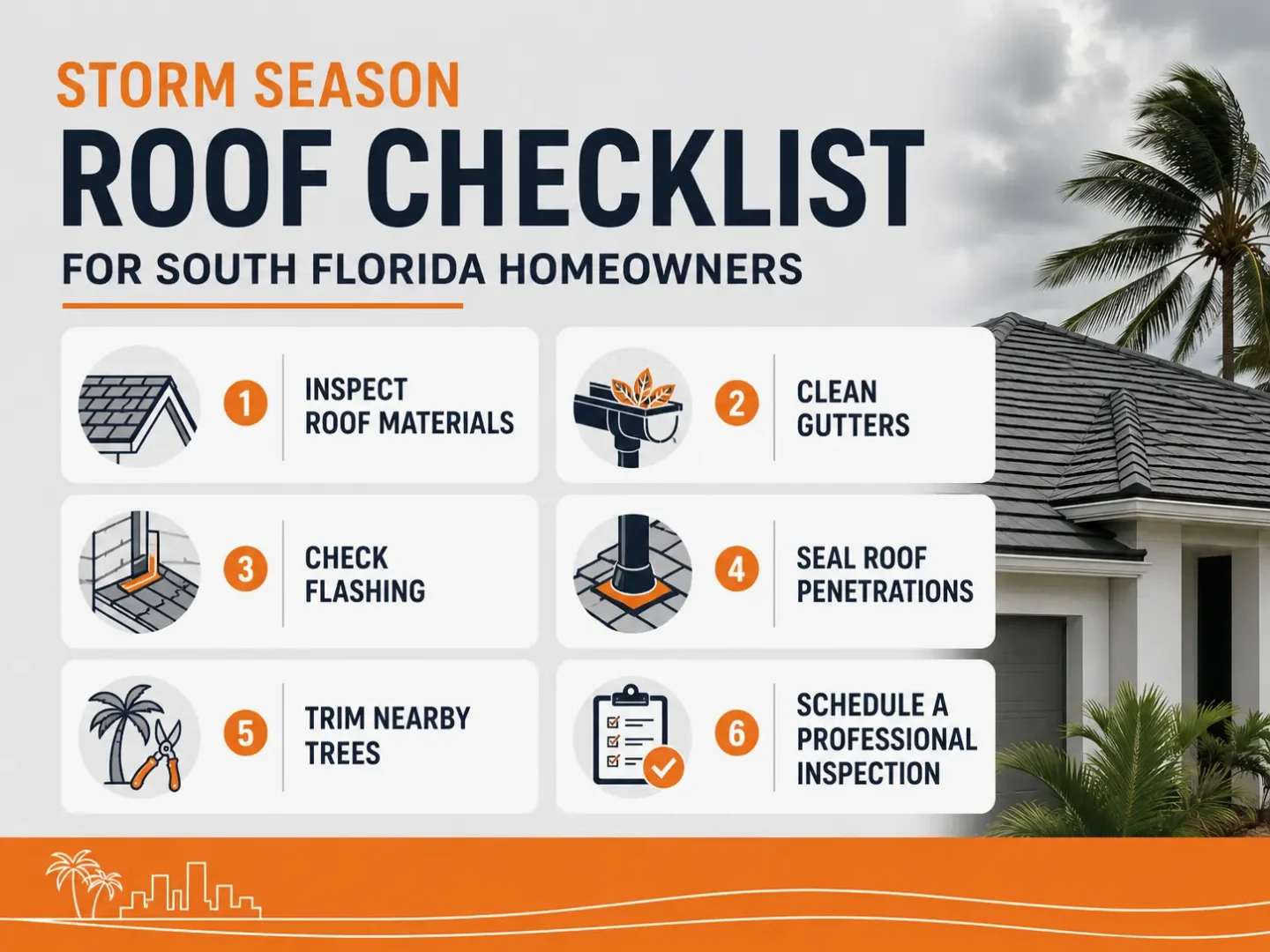
3. Look Around Roof Penetrations
Roof penetrations are common leak points. These include vents, pipes, skylights, exhaust openings, satellite mounts, and other areas where something passes through the roof.
During storms, wind-driven rain can push water into weak sealant areas. If flashing, boots, or sealants are old or damaged, water may enter the home.
Pay attention to:
- Plumbing vent boots
- HVAC or exhaust vents
- Skylight edges
- Chimney flashing
- Satellite or equipment mounts
- Sealant around roof openings
For older homes or homes that have had previous roof repairs, this step is especially important.
4. Check Flashing and Roof Edges
Flashing helps protect the transitions where the roof meets walls, edges, valleys, chimneys, or other surfaces. If flashing is loose, bent, rusted, cracked, or poorly sealed, it can become a major source of leaks.
Roof edges also need attention because strong winds can lift loose materials and create openings for water.
A professional roof maintenance inspection can review flashing, roof edges, and transition points to help identify vulnerabilities before severe weather arrives.
5. Trim Trees and Remove Loose Debris
Branches hanging over the roof can become a serious problem during a storm. Wind can break branches, scrape roofing materials, clog gutters, or drop debris onto weak areas.
Before storm season, clear or trim:
- Overhanging branches
- Dead limbs
- Loose palm fronds
- Yard debris near the home
- Items that could become wind-driven debris
- Leaves and buildup near gutters or valleys
This simple step can reduce the chance of roof damage during strong weather.
6. Check the Attic and Interior Ceilings
Roof problems do not always show clearly from the outside. Sometimes the first signs appear inside the home.
Look for:
- Ceiling stains
- Musty odors
- Damp insulation
- Water marks near walls
- Peeling paint
- Mold or mildew concerns
- Light entering through the attic roof deck
If you notice signs of moisture, do not wait. Water intrusion can spread quietly and become more expensive to repair later.
For moisture-related concerns, waterproofing and moisture protection services may also help address areas beyond the main roof surface.
7. Review Previous Repairs
If your roof has been patched before, storm season is the right time to review those areas. Temporary repairs may not hold up well under repeated rain and wind.
Previous repair zones should be checked for:
- Cracked sealant
- Loose patch materials
- Reopened seams
- Soft areas
- Stains below the repaired section
- Signs of recurring leaks
A roof that has needed several small repairs may require a deeper evaluation to determine whether maintenance, restoration, or replacement is the better long-term solution.
Storm Season Ready
Is your roof ready for South Florida storm season?
SWC Builders can inspect your roofing system, identify weak points, and recommend practical solutions to help protect your home before heavy rain and wind arrive.
Schedule a Roof InspectionWhen to Call a Professional Roofer
Some roof preparation tasks are simple, but many problems require a trained roofing professional. This is especially true if you see active leaks, missing materials, damaged flashing, standing water, or interior moisture.
You should call a professional if you notice:
- A leak during or after rain
- Missing or damaged roofing materials
- Water stains inside the home
- Repeated gutter overflow
- Loose flashing
- Sagging roof areas
- Storm damage
- A roof that has not been inspected recently
A professional inspection gives you a clearer picture of the roof’s condition and helps you make decisions before emergency repairs are needed.
Final Thoughts
Storm season roof preparation is one of the smartest ways to protect your South Florida home. A roof does not need to fail completely to create expensive problems. Small issues can quickly become serious when heavy rain, wind, and humidity arrive.
By checking roofing materials, drainage, flashing, penetrations, trees, attic spaces, and previous repairs, homeowners can reduce risk and prepare with more confidence.
Protect Your Home
Prevent roof problems before the next storm hits.
From roof inspections and maintenance to repairs and waterproofing, SWC Builders helps South Florida homeowners protect their properties with reliable construction solutions.
Contact SWC Builders