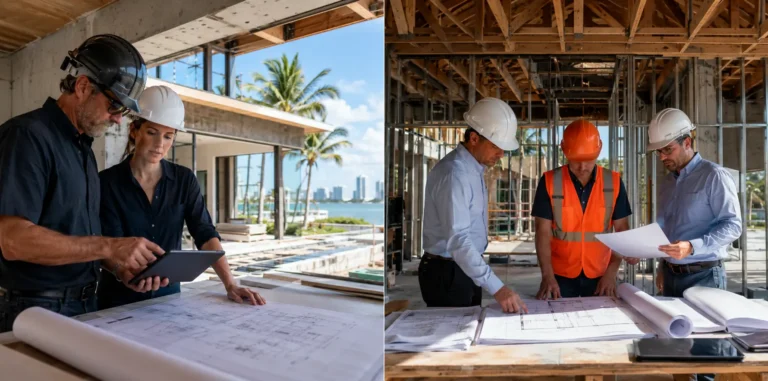
Choosing the right construction delivery method can make a major difference in how smoothly your project moves from idea to completion. In South Florida, where projects often involve permits, strict building requirements, weather delays, material coordination, and multiple trades, the way your project is managed matters just as much as the final design.
Two of the most common approaches are Design-Build and Traditional Construction, also known as Design-Bid-Build. Both can work well, but they are not the same. The best option depends on your project goals, timeline, budget, and how much coordination you want handled by one team.
For homeowners, property managers, HOAs, developers, and business owners, understanding the difference can help prevent delays, reduce confusion, and create a better construction experience.
What Is Traditional Construction?
Traditional construction usually separates the design and construction phases. First, the owner hires an architect or designer to create the plans. Once the design is complete, contractors are invited to bid on the project. After reviewing the proposals, the owner selects a contractor to build the project.
This process can work well when the scope is very clear and the owner already has a full design package ready. It also gives the client the opportunity to compare multiple contractor bids before choosing who will execute the work.
However, traditional construction can also create challenges. Because the designer and contractor are usually separate teams, communication gaps may appear. If the plans do not align with real field conditions, budget expectations, or construction details, the project may require changes before or during construction.
Common challenges with the traditional model include:
- Longer pre-construction timelines
- Separate communication between designer and contractor
- Possible conflicts between design intent and field execution
- More responsibility on the owner to coordinate parties
- Higher risk of change orders if the scope is unclear
- Delays when design revisions are needed
For complex projects in South Florida, this separation can become especially difficult when permits, inspections, weather conditions, and trade coordination are all part of the process.
What Is Design-Build?
Design-Build is a more integrated construction method. Instead of hiring separate teams for design and construction, the owner works with one company or one coordinated team responsible for both planning and execution.
This means design, budgeting, scheduling, permits, and construction decisions can be aligned earlier in the process. The contractor’s practical construction knowledge is part of the conversation from the beginning, which can help avoid unrealistic plans, budget surprises, and unnecessary redesign.
For clients looking for a more streamlined experience, Design-Build construction services can offer a more coordinated path from concept to completion.
In a Design-Build approach, the team can help evaluate:
- Project goals
- Budget expectations
- Timeline requirements
- Material options
- Permit needs
- Construction feasibility
- Trade coordination
- Long-term performance
This method is often attractive for residential renovations, commercial build-outs, roofing-related structural work, waterproofing projects, interior remodeling, and larger scopes that require multiple trades.
Design-Build vs. Traditional Construction: Key Differences
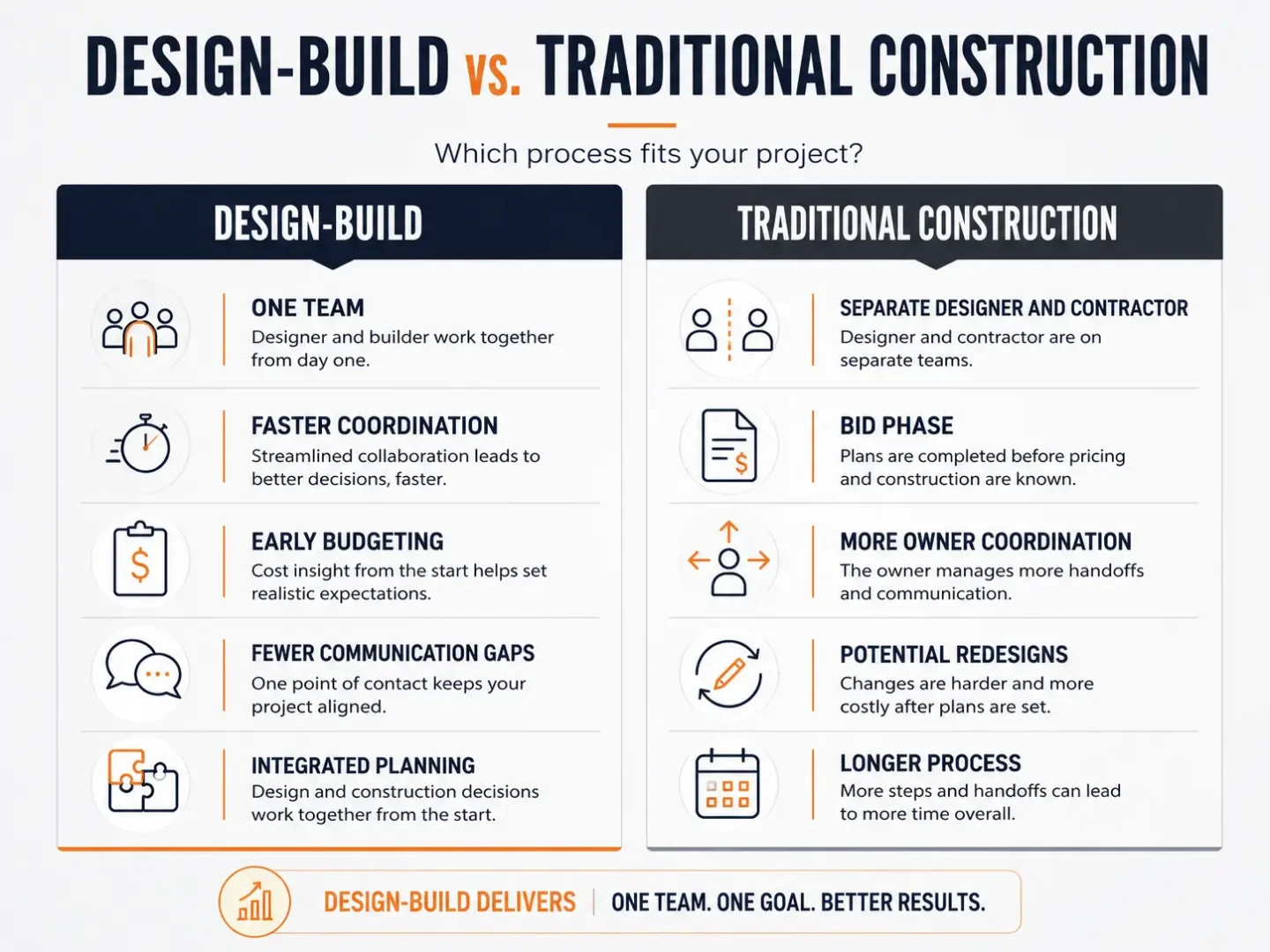
The biggest difference between both models is coordination.
In traditional construction, the owner may need to manage communication between the designer, contractor, consultants, subcontractors, and sometimes the permitting team. In Design-Build, that coordination is handled through one integrated process.
This can make the project easier to manage, especially when the work involves multiple scopes such as framing, roofing, plumbing, electrical, mechanical systems, drywall, waterproofing, windows, doors, or interior finishes.
Advantages of Design-Build in South Florida
South Florida construction has its own challenges. Permitting, hurricane-related requirements, humidity, coastal exposure, HOA approvals, inspections, and material lead times can all affect the success of a project.
Design-Build can be useful because it allows planning and construction decisions to happen together. Instead of waiting until after the design is finished to discover cost or feasibility issues, the team can identify those concerns earlier.
Key advantages include:
- One point of contact for the client
- Better communication between planning and execution
- Earlier budget guidance
- Faster decision-making
- Improved coordination between trades
- Reduced risk of design conflicts
- More practical construction planning
- Easier adjustment when field conditions change
For property owners who want a smoother process, working with one coordinated team for general contracting and construction management can help reduce confusion and keep the project moving.
When Traditional Construction May Still Make Sense
Traditional construction is not always a bad option. In some cases, it may be the right fit.
For example, if you already have completed architectural plans, engineering documents, and a very clearly defined scope, bidding the project to multiple contractors may help compare pricing. This can work for owners who are comfortable managing a more formal selection process.
Traditional construction may also fit projects where the design is highly specialized and the owner wants to keep the designer independent from the builder.
However, this model requires strong communication. If the owner, designer, and contractor are not aligned, the project can experience delays, change orders, and budget pressure.
Which Option Is Better for Residential Projects?
For homeowners in South Florida, Design-Build is often a strong choice when the project involves remodeling, additions, roofing-related improvements, waterproofing, or a full renovation.
Many homeowners do not want to manage several separate vendors. They want clear communication, realistic pricing, help with permits, and a contractor who can guide them through the process.
This is especially important for projects where the family may still be living in the home during construction. Good planning can help reduce disruption, organize the work in phases, and avoid unnecessary surprises.
For residential projects, residential remodeling and construction services can help bring planning, coordination, and execution under one organized process.
Which Option Is Better for Commercial Projects?
For commercial clients, property managers, HOAs, and business owners, Design-Build can offer major benefits because commercial projects often require more coordination.
A commercial renovation or build-out may involve:
- Work schedules that reduce business disruption
- Permit and inspection planning
- Coordination with tenants or residents
- Safety requirements
- Multiple trades working together
- Clear reporting for owners, boards, or decision-makers
In these cases, the value of a single coordinated construction partner can be significant. The client does not only need the work completed. They need it completed with organization, accountability, and minimal disruption.
For commercial work, commercial construction and build-out services can help support better project control from planning to completion.
Cost, Timeline, and Communication
One of the biggest reasons clients compare Design-Build and traditional construction is cost. The important thing to understand is that the cheapest starting number is not always the best final value.
A traditional bid may look attractive at first, but if the scope is incomplete or the plans require adjustments, the final cost may change. Design-Build can help identify budget concerns earlier, allowing the client to make informed decisions before construction starts.
The same applies to timelines. A project with better early coordination often has fewer interruptions once work begins.
In many cases, Design-Build provides stronger value because it connects three important pieces from the start:
- What the client wants
- What the budget allows
- What the field conditions require
Project Planning
Need help choosing the right construction approach?
SWC Builders can help evaluate your project scope, compare options, and guide you toward a construction process that fits your goals, timeline, and budget.
Request a ConsultationHow SWC Builders Approaches Construction Projects
SWC Builders focuses on professional coordination, clear communication, and reliable execution. Whether the project is residential or commercial, the goal is to create a process that helps clients understand the scope, make informed decisions, and move forward with confidence.
Our team supports construction projects with services that may include general contracting, Design-Build, turnkey solutions, construction management, roofing, waterproofing, remodeling, and interior improvements.
That integrated experience allows SWC Builders to help clients think beyond one isolated task and consider the full project picture: timeline, materials, permits, coordination, durability, and long-term value.
Final Answer: Which One Is Better?
There is no single answer for every project.
Traditional construction may work well when the plans are complete, the scope is simple, and the owner is comfortable coordinating multiple parties.
Design-Build is often better when the client wants a more streamlined process, stronger coordination, earlier budget guidance, and one team responsible for bringing the project together.
In South Florida, where construction projects often require careful planning, local experience, and coordination between multiple trades, Design-Build can be a smart option for many residential and commercial projects.
If you are planning a renovation, build-out, roofing-related project, waterproofing scope, or full construction project, the best first step is to speak with a qualified team that can help you understand your options before you commit.
Ready to Build?
Let’s plan your next project with confidence.
From Design-Build to general contracting and construction management, SWC Builders helps residential and commercial clients move from idea to execution with clarity and professional coordination.
Contact SWC Builders